
Best Fly Fishing Books: Picks from the Club's Bookshelf for World Book Day

From a free 19th-century classic to a 2025 Patagonia release, our list of the best fly fishing books includes fly tying guides, casting instruction, Pacific Northwest steelhead, conservation reading, fly fishing literature, and one Victorian museum heist.

Fly fishing is one of those sports where you can pick up some gear and be on the water in a single afternoon. Learning the basics doesn't take long. But the deeper you go, the more you realize there's no ceiling on how much there is to know. The entomology, the casting mechanics, the history, the art of tying flies that actually work.
That's part of what draws people in and keeps them there.
In honor of World Book Day, we asked members to share the titles they keep coming back to. The conversation started on the club's private member forum. Nine members responded with 33 titles spanning fly tying, casting instruction, Pacific Northwest conservation, literary fiction, and true crime. What follows is a selection drawn from those recommendations, organized by theme, grounded in honest member insight, and backed by what reviewers have said.
There's something here for you whether you've been fishing for 40 years or haven't cast a single fly yet.
FEATURED REVIEWS
Fly Fishing History & Classic Texts
The Fly-Fisher's Entomology by Alfred Ronalds (1836)
Fly Fishing Technique & Casting Instruction
The Little Black Book of Fly Fishing by Kirk Deeter and Chris Hunt (2021)
Casting Angles by Mac Brown (1997)
River Fly-Fishing: The Complete Guide by Peter Lapsley (2003)
The Curtis Creek Manifesto by Sheridan Anderson (1978)
Fly Tying Books
Pheasant Tail Simplicity by Yvon Chouinard, Craig Mathews, and Mauro Mazzo (2025)
Steelhead Fly Tying: Art and Design by Dec Hogan and Marty Howard (2018)
Chasing Chrome by Jonathan Farmer, designed by Marty Howard (2024)
Fly Fishing Literature & True Crime
Trout Bum by John Gierach (1986)
A River Runs Through It by Norman Maclean (1976)
The Feather Thief by Kirk Wallace Johnson (2018)
The Earth Is Enough by Harry Middleton (1989)
The River Why by David James Duncan (1983)
Conservation Reading
Salmon Wars by Douglas Frantz and Catherine Collins (2022)
Stillwater Fly Fishing
Stillwater Fly Fishing by Devin Olsen (2024)
MORE MEMBER RECOMMENDATIONS
Fly Fishing Small Streams by John Gierach | River Music by James R. Babb | Fly Fishing Through the Midlife Crisis by Howell Raines | Survival Guide for Beginning Fly Anglers by Skip Morris | Tying Nymphs by Charlie Craven | Stillwater Strategies by Tim Lockhart | Morris and Chan: Fly Fishing Trout Lakes by Skip Morris and Brian Chan | Upstream by Langdon Cook | Reading the Water by Dave Hughes | On the Spine of Time / The Starlight Creek Angling Society by Harry Middleton | W. Blacker's Art of Angling by W. Blacker | The History of Fly-Fishing in Fifty Flies by Ian Whitelaw | A River's Gifts: The Mighty Elwha River Reborn by Patricia Newman | The Orvis Ultimate Book of Fly Fishing by Tom Rosenbauer | The Orvis Guide to Beginning Fly Fishing by Tom Rosenbauer | The Benchside Reference by Ted Leeson | Trout by Ray Bergman
Fly Fishing History & Classic Texts
The Fly-Fisher's Entomology by Alfred Ronalds (1836)
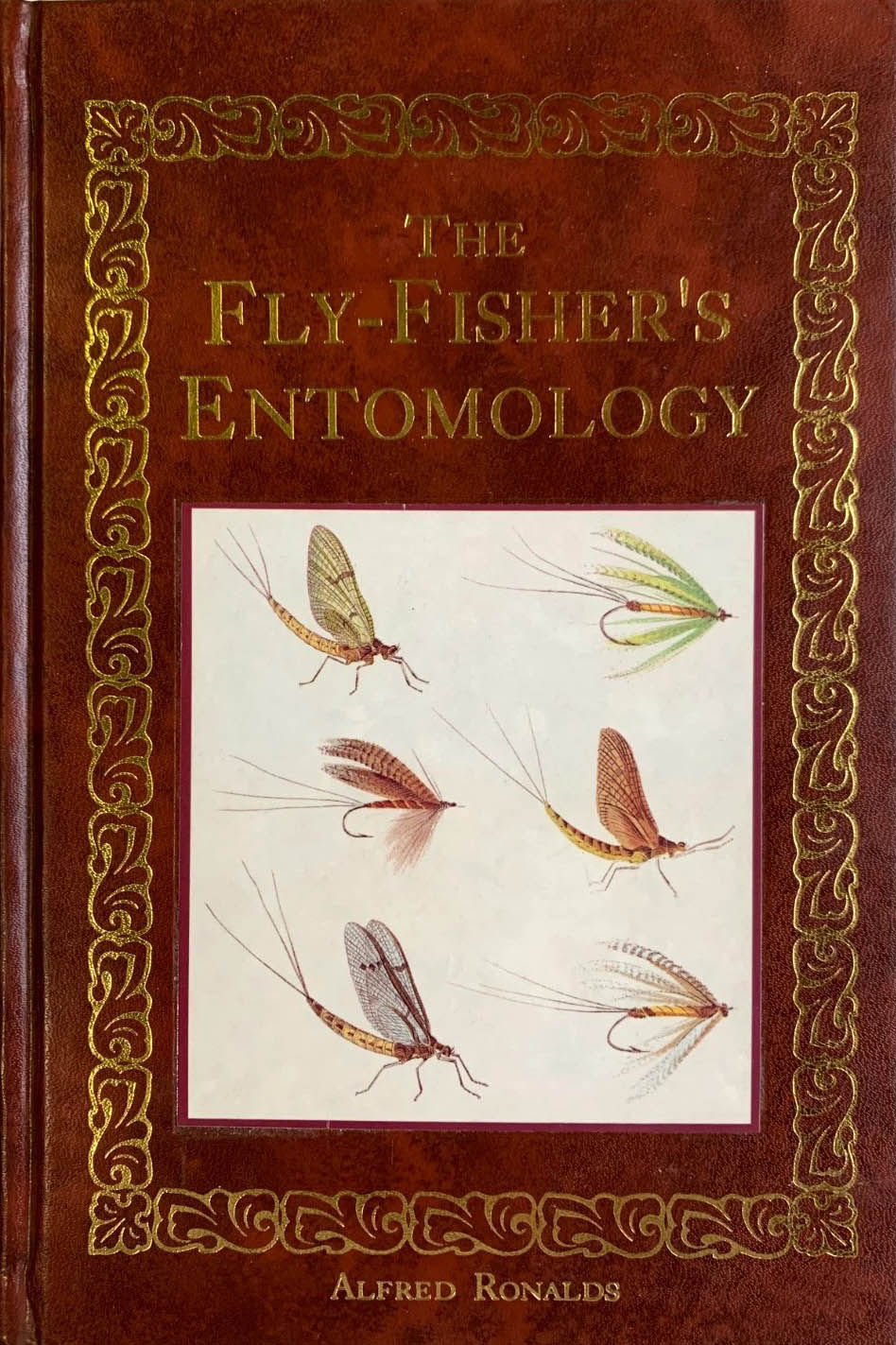
Before there were fly shops or YouTube tutorials, there was Alfred Ronalds. First published in 1836, this is one of the foundational texts of fly fishing entomology. It's a detailed study of the insects trout eat, paired with hand-colored illustrations of both natural bugs and the artificial flies tied to match them.
The book went through multiple editions between 1836 and 1913. But the entomology of trout feeding hasn't changed. Neither has the value of learning to identify what's on the water.
Jeremy Edwards said, "It's a treat to explore the roots of today's fly fishing philosophies, and the colored illustrations are as practical as they are aesthetic, making fly identification much easier for novice anglers."
— Recommended by Jeremy Edwards
Fly Fishing Technique & Casting Instruction
The Little Black Book of Fly Fishing: 201 Tips to Make You a Better Angler by Kirk Deeter and Chris Hunt (2021)
There's a moment in most fly fishers' development when the basics are no longer the problem. You can cast. You're catching fish. But you can't always explain why a presentation works or why a specific run keeps beating you. This book is written for that angler.
Kirk Deeter is vice president and editor-in-chief of Trout Media, the communications arm of Trout Unlimited. Chris Hunt is Trout Media's national digital director and an award-winning journalist recognized by the Associated Press, the Society of Professional Journalists, and the Outdoor Writers Association of America.
Together they built an advanced fly fishing instruction guide with 201 tips organized around casting, presentation, reading water, fly selection, and gear. Hatch Magazine called it a book for anglers ready to "ski the black diamonds." The book is dedicated to the late Charlie Meyers, the Denver Post outdoors editor who co-wrote the original Little Red Book of Fly Fishing with Deeter.
One standout tip: "A great reach cast is worth 1,000 mends." That kind of specific, field-tested advice runs through every chapter.
— Recommended by Steve Ruppert
Casting Angles by Mac Brown (1997)
Mac Brown founded the fly fishing program at Western Carolina University and holds a Master Casting Instructor certification. Casting Angles is a fly casting instruction book built on geometry, not intuition. It breaks down presentation casts, casting principles, and common errors in a way that lets anglers diagnose and fix their own mechanics.
Endorsed by both the ACA and FFI, it has also been adopted by casting instructors as a reference text. It’s particularly useful for intermediate fly fishers who feel they've plateaued: the kind of caster who gets fish but can't explain why certain presentations fail.
Jeremy Edwards said, "If you're ready to move beyond intuition and examine your cast down to the actual angles, this is the definitive guide."
Your best bet to track this one down is to buy directly from Mac at Mac Brown Fly Fish.
— Recommended by Jeremy Edwards
River Fly-Fishing: The Complete Guide by Peter Lapsley (2003)
Jeremy Edwards has this one on loan from a fellow club member. That's as good an endorsement as any. Lapsley is a nationally certified game angling instructor who fished for trout and grayling across the UK and abroad for more than four decades. He also owned and operated a trout fishery in Hampshire before writing this book. The result reads less like a textbook and more like hard-won experience set down in order.
It covers river fly fishing from the ground up: reading water, fish behavior, tackle, casting, fly selection, and seasonal strategy.
Jeremy Edwards said, "I start reading all the history of fly fishing, the old books, and I feel like I had to read a whole bunch of books to get the knowledge that was covered in this one."
Worth noting: Lapsley fishes primarily British chalk streams. The species and conditions differ from Pacific Northwest rivers. The principles, however, translate.
— Recommended by Jeremy Edwards
The Curtis Creek Manifesto by Sheridan Anderson (1978)
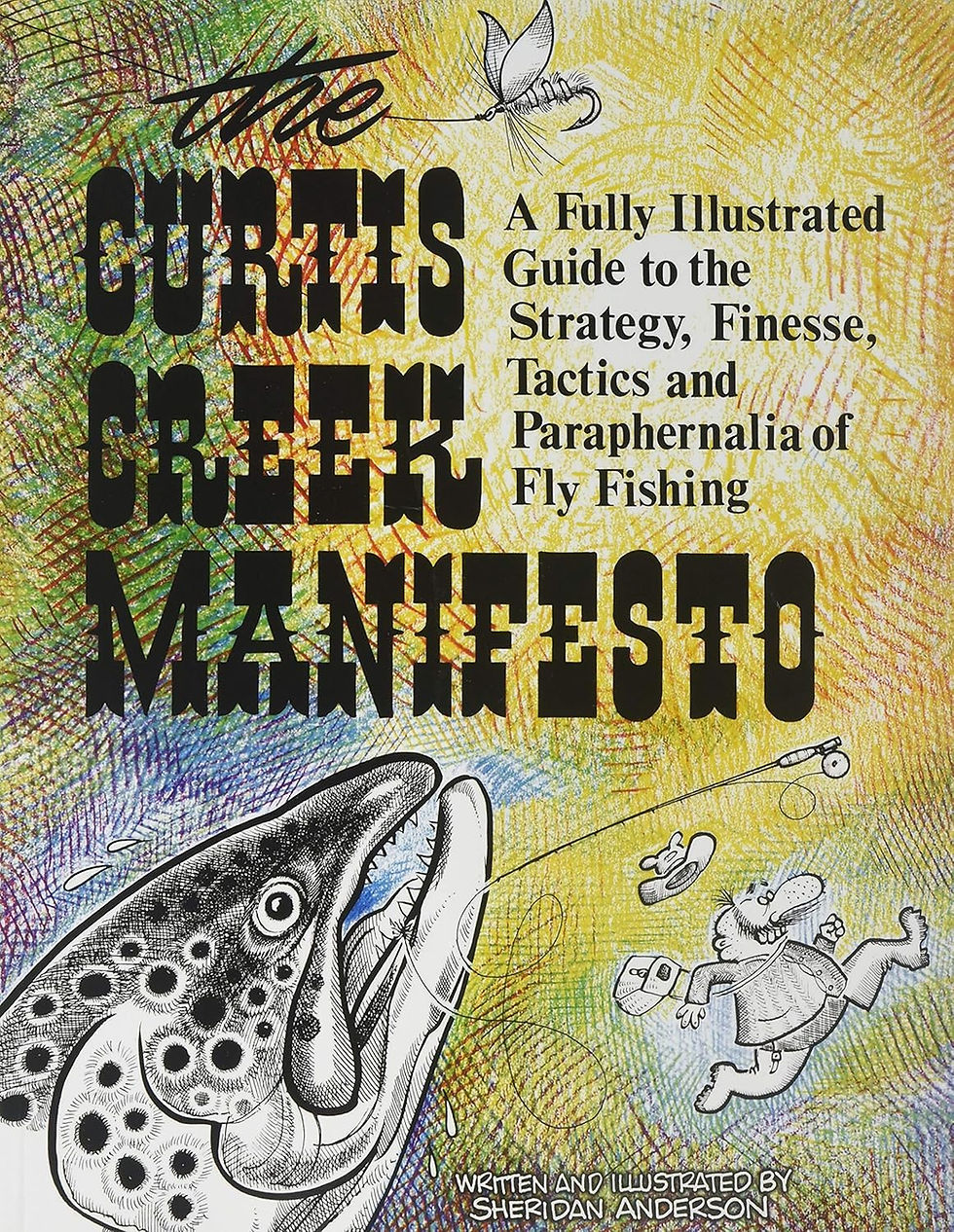
Forty-eight pages. Hand-drawn cartoons. No table of contents, no index, no jargon. The publisher calls it the best-selling fly fishing book of all time. Maybe. Maybe not. But one thing’s for certain: it’s earned that claim the hard way, by being passed from angler to angler, generation to generation, since 1978.
Anderson set out to solve a specific problem. As he writes in the book's opening: most fly fishing how-to books bury beginners under an avalanche of information, and most anglers learned to fish in spite of the textbooks rather than because of them. His solution was to draw it instead.
Every concept is explained through illustrations and terse, funny captions that land harder than most paragraphs. Reading water, presenting a fly, approaching fish without spooking them.
One reviewer described it as covering vast subjects with a structure that only seems random: rod selection, casting, fly tying, reading water. The topics build on each other. You realize the logic as your skills develop. Experienced anglers keep coming back to it too, not just beginners.
Brian Huntoon said, "Super fun cartoon-style with lots of humor and solid fly fishing tips." That's accurate. It's also one of the most efficient transfers of fly fishing knowledge ever printed.
— Recommended by Brian Huntoon
Fly Tying Books
Pheasant Tail Simplicity: Recipes and Techniques for Successful Fly Fishing by Yvon Chouinard, Craig Mathews, and Mauro Mazzo (2025)
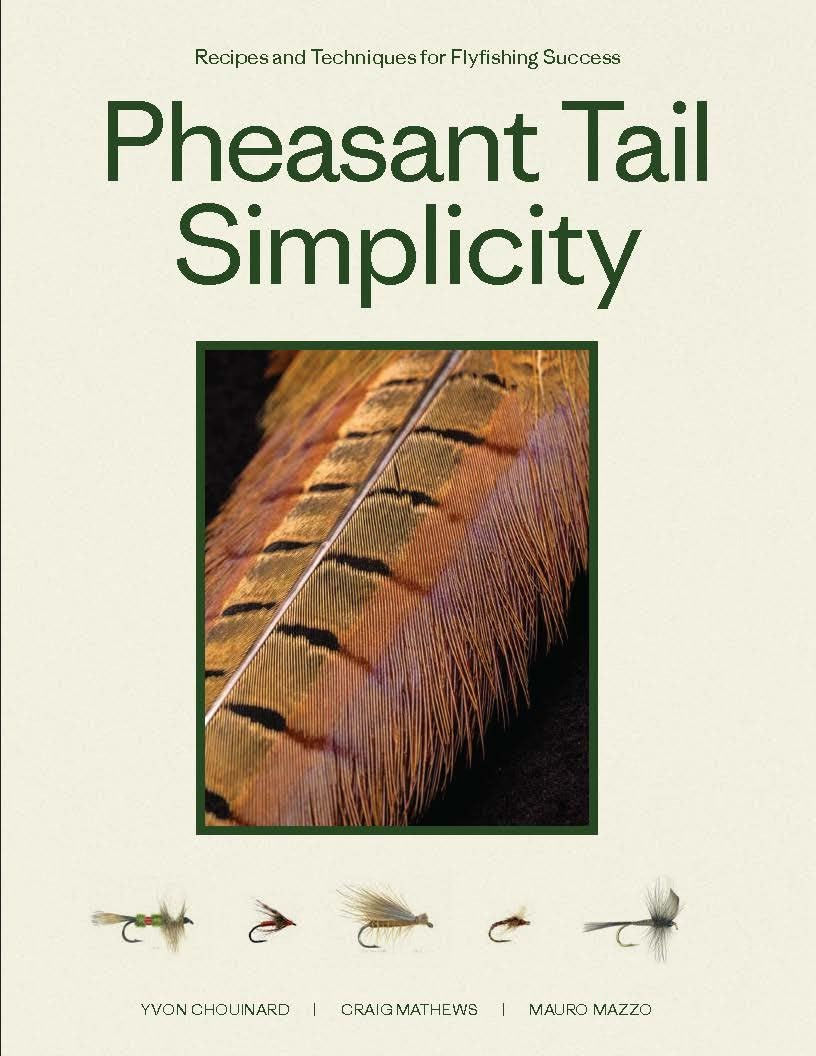
The newest fly tying book on the list, published by Patagonia in October 2025. One reviewer called it the best fly fishing book published that year, bar none. The premise is a direct challenge to the fly shop's endless wall of patterns.
Three legendary anglers, with nearly 200 years of combined experience, make the case that 18 flies tied from a single material can cover virtually any situation on the water. That material is pheasant tail. The patterns span nymphs, dry flies, emergers, and beetles.
The book is organized as a collection of vignettes, anecdotes, and fly recipes with photography throughout. QR codes link to instructional tying and presentation videos. Each author covers his own specialty: Chouinard on wet flies and soft hackles, Mathews on dry flies and emergers, Mazzo on nymphing.
The authors are not obscure. Yvon Chouinard founded Patagonia and co-founded 1% for the Planet with Craig Mathews. (That’s the same Chouinard who wrote the foreword to Salmon Wars, also on this list.) Mathews founded Blue Ribbon Flies, one of the club’s favorite shops in West Yellowstone, and was named Fly Rod & Reel's Angler of the Year. Fly Fisherman Magazine called it a book you'll open again and again.
The argument at its center connects directly to what fly fishing is really about: skill, observation, and time on the water. Not more gear.
— Recommended by Dan Warren
Steelhead Fly Tying: Art and Design by Dec Hogan and Marty Howard (2018)
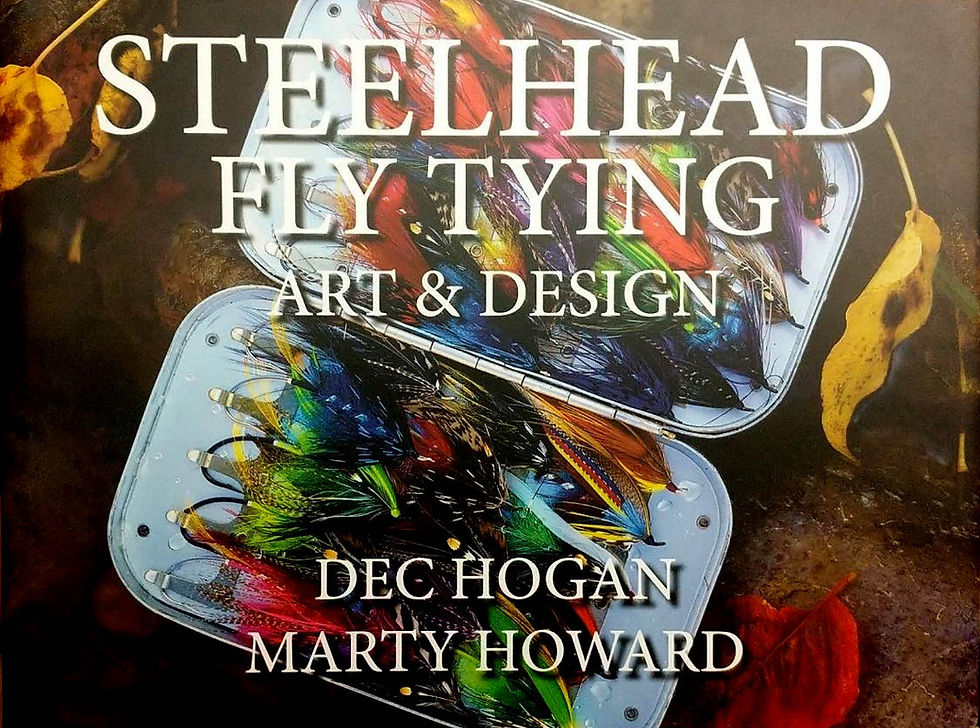
This one is part instruction manual, part coffee-table book, part history of Pacific Northwest steelhead fly tying.
Dec Hogan and Marty Howard are both legendary in Pacific Northwest fishing circles. They opened their fly boxes and documented 24 steelhead fly patterns in full step-by-step detail.
Over 300 photographs. More than 55 patterns in the gallery section. The oversized 13" x 9" format sounds awkward until you realize it lays flat on a tying bench and stays there.
Our friends at Avid Angler called it "a fly tying masterpiece," and noted that Hogan and Howard's in-shop tying class is consistently their most popular offering.
The book traces the origins of contemporary Northwest steelhead patterns. It's a history lesson as much as a technique guide.
Available at Avid Angler.
— Recommended by Jeremy Edwards
Chasing Chrome: Tying Steelhead and Pacific Salmon Flies by Jonathan Farmer, designed by Marty Howard (2024)
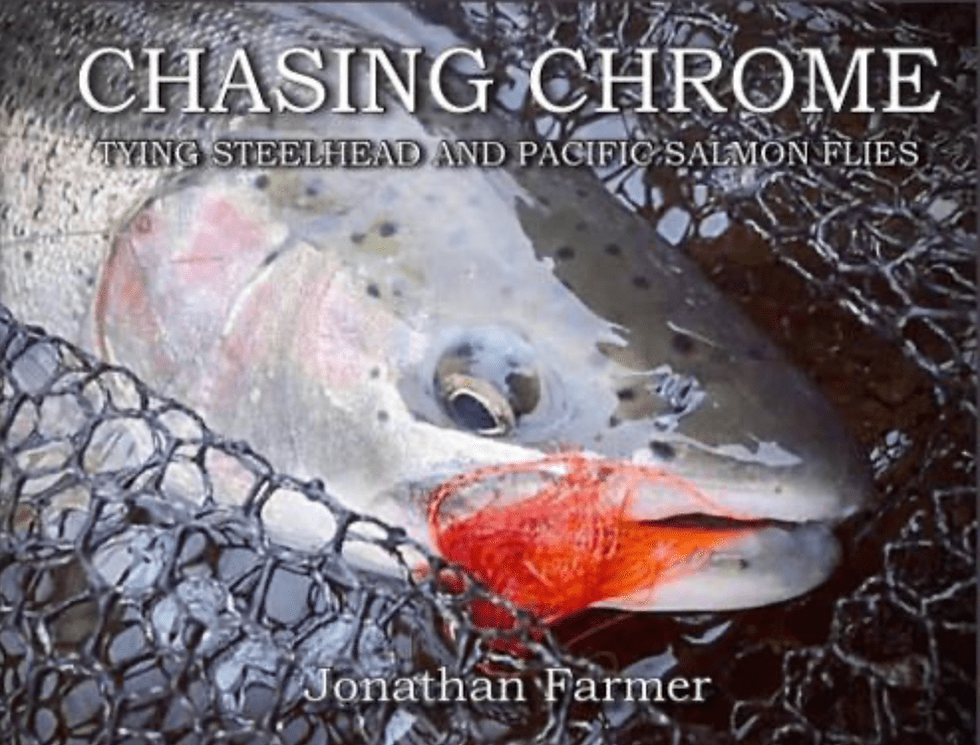
The newer companion to Steelhead Fly Tying, published in July 2024. Jonathan Farmer covers more than 20 steelhead and Pacific salmon fly patterns. Weighted, unweighted, and tube flies, with step-by-step tying instructions, material guides, and fishing context for each.
Marty Howard's design work gives it the same large-format, bench-friendly layout as the earlier book. Coverage ranges from Alaska to the Great Lakes.
Jeremy Edwards said both books make "de-coding these complex, magical flies much easier." He also finds himself flipping through them just to appreciate the artistry, even when he's not at the vise.
Chasing Chrome can be harder to track down. Steelhead Fly Tying: Art and Design is usually in stock at Avid Angler.
— Recommended by Jeremy Edwards
Fly Fishing Literature & True Crime
Trout Bum by John Gierach (1986)
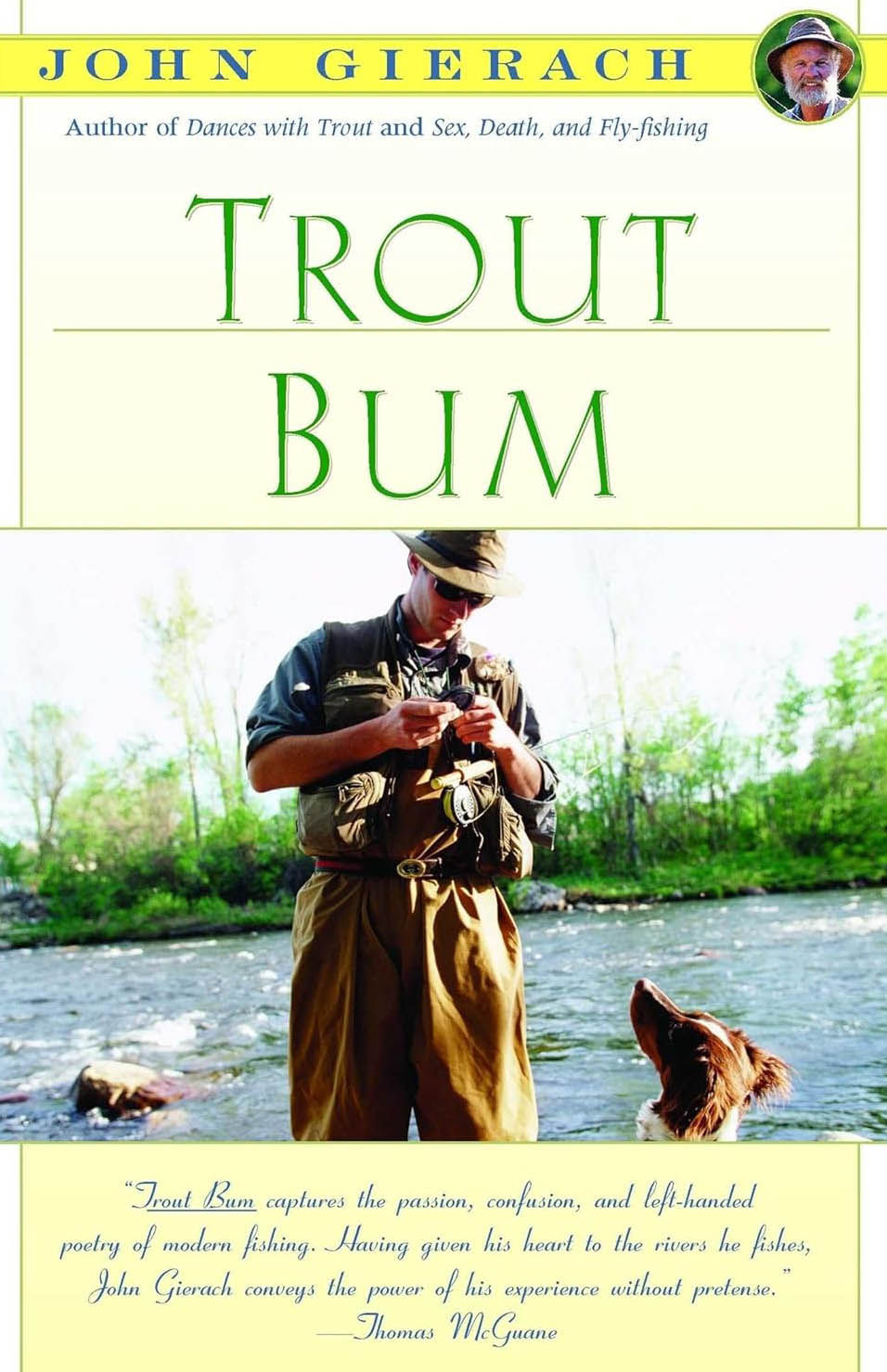
John Gierach died in October 2024. He was 76. The Wall Street Journal called him "the voice of the common angler." Kirkus Reviews called him "the dean of fly-fishing." He was inducted into the Fly Fishing Hall of Fame. He wrote more than 20 fly fishing books, and nearly all of them stayed in print because once people found him, they didn't stop reading.
Trout Bum was the book that started it. Published in 1986, it introduced a voice that was funny, plainspoken, and quietly serious about the right things: the quality of light on a stream, the company of people who know how to be quiet, the particular satisfaction of a sport that can't be rushed.
The essays move from small mountain creeks in Colorado to bamboo rod makers to the philosophy of catch-and-release. They hold together because Gierach is always thinking, even when he's pretending not to be.
He never chased trends. He wrote about fly fishing the way fishing actually feels: sometimes slow, occasionally frustrating, usually worth it. That consistency is why readers who found him in 1986 were still buying his books when All the Time in the World came out in 2023, the last one published in his lifetime.
Bob Chaffee recommended anything by him without specifying a title. Trout Bum is where to start.
— Recommended by Bob Chaffee
A River Runs Through It by Norman Maclean (1976)
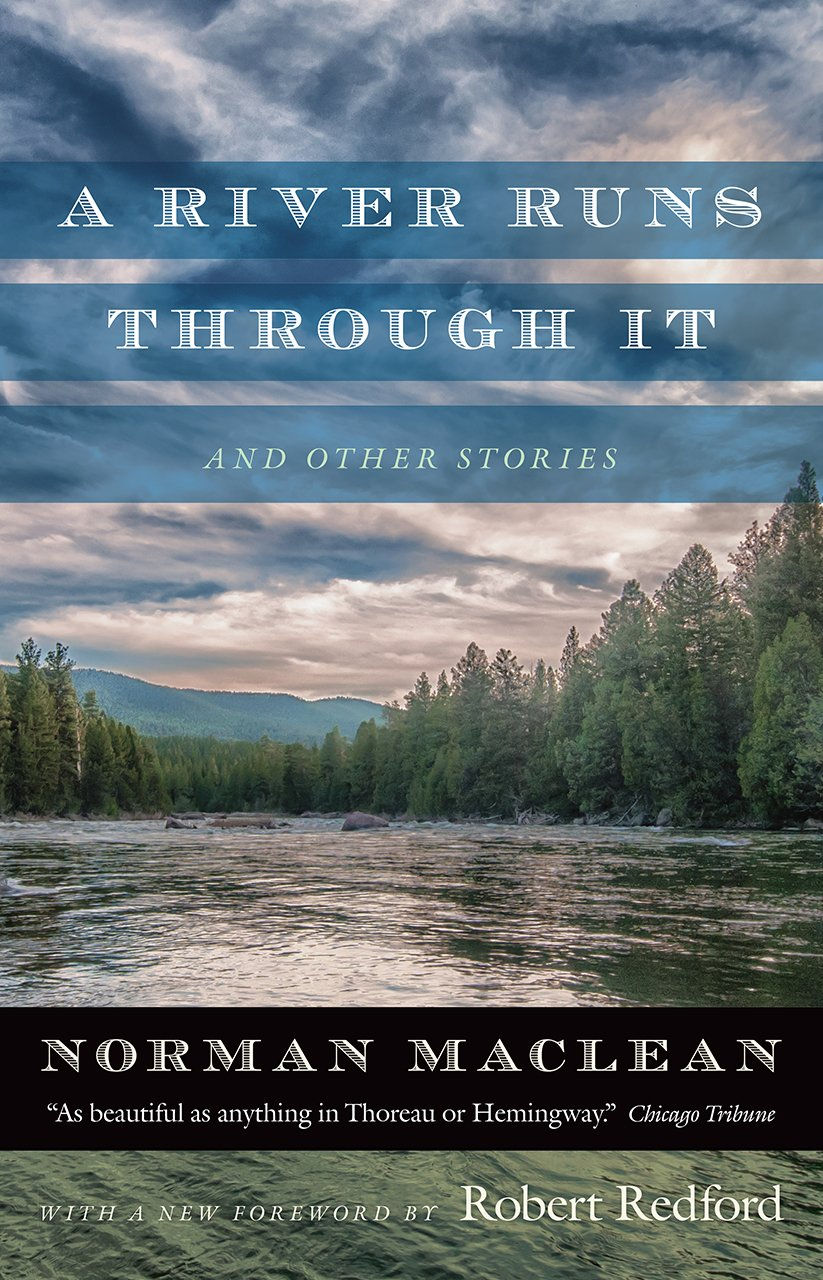
Norman Maclean was a retired English professor who had never published fiction when the University of Chicago Press released this collection in 1976. He was 73 years old.
New York publishers had rejected the manuscript repeatedly. One editor reportedly replied that it "has trees in it." The University of Chicago Press took it anyway, making it the first work of fiction they had ever published.
The title novella became one of the most celebrated American stories of the twentieth century. It was nominated for the Pulitzer. The Chicago Tribune compared its passages to Thoreau and Hemingway. Robert Redford's 1992 film brought it to a wider audience. But as Eric Scollard puts it: "You've all seen the movie, but have you read the novella? It is so wonderfully written."
The story is semi-autobiographical: two brothers, a Presbyterian minister father, and the Big Blackfoot River in Montana in the early twentieth century. Fly fishing runs through it as both activity and metaphor. For family, for faith, for what we can and cannot save in the people we love. The prose is lyrical without being decorative. The grief at its center is real.
The "other stories" in the collection, which most readers skip, are worth your time. They are rougher, funnier and carry the same weight.
— Recommended by Eric Scollard
The Feather Thief: Beauty, Obsession, and the Natural History Heist of the Century by Kirk Wallace Johnson (2018)
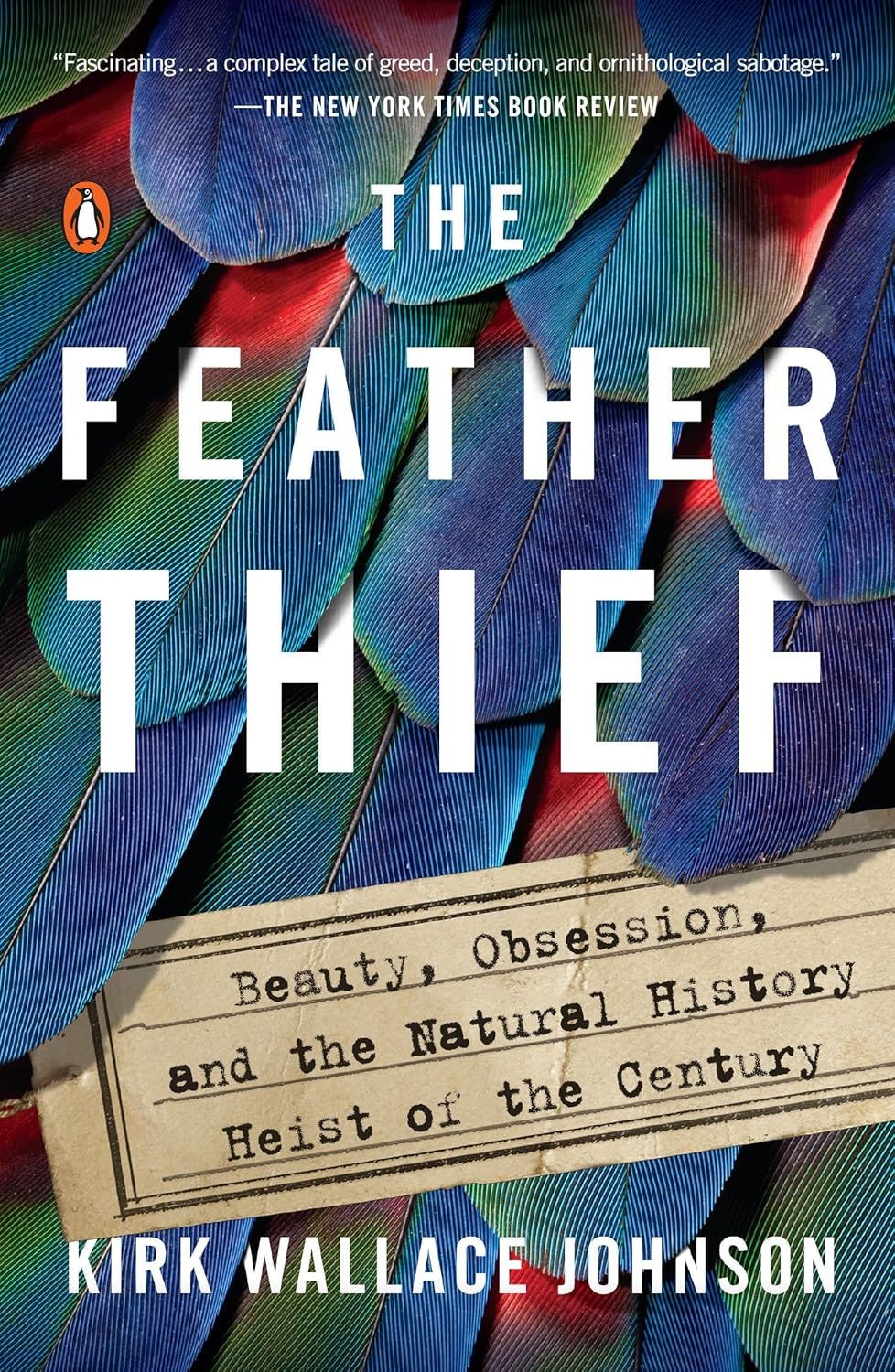
In June 2009, a 20-year-old American flautist named Edwin Rist performed a concert at London's Royal Academy of Music. He boarded a train to the suburbs, broke into the British Museum of Natural History's annex at Tring, and walked out with 299 rare Victorian bird specimens. The birds had been collected by naturalists including Alfred Russel Wallace, Darwin's great contemporary.
Rist's plan was to sell their feathers to salmon fly tiers.
Kirk Wallace Johnson came to the story the way many fly fishers come to obsession: standing in a river, not thinking about much, when a guide mentioned something that wouldn't let go. He spent years following the case. He tracked down feather dealers online, interviewed the insular global community of Victorian salmon fly tiers, and pursued buyers who had purchased Rist's stolen skins across multiple countries.
NPR's Fresh Air called the result a ‘non-fiction book with all the elements of a classic thriller’. Publishers Weekly gave it a starred review. The New York Times Book Review called it fascinating. The Wall Street Journal called it the kind of ‘intelligent reported account that alerts us to a threat’.
The story touches on conservation in ways that matter to anyone who fishes. The bird skins weren't just trophies. They were scientific records. 150-year-old data points carrying information about species populations and environmental baselines that science hasn't finished asking questions about. Rist destroyed many of their labels. That loss is permanent.
Randy White calls it "an incredible book." He's right. You don't need to know anything about Victorian salmon flies to find it unputdownable. But you'll know quite a bit about them by the time you're done.
— Recommended by Randy White
The Earth Is Enough: Growing Up in a World of Flyfishing, Trout & Old Men by Harry Middleton (1989)
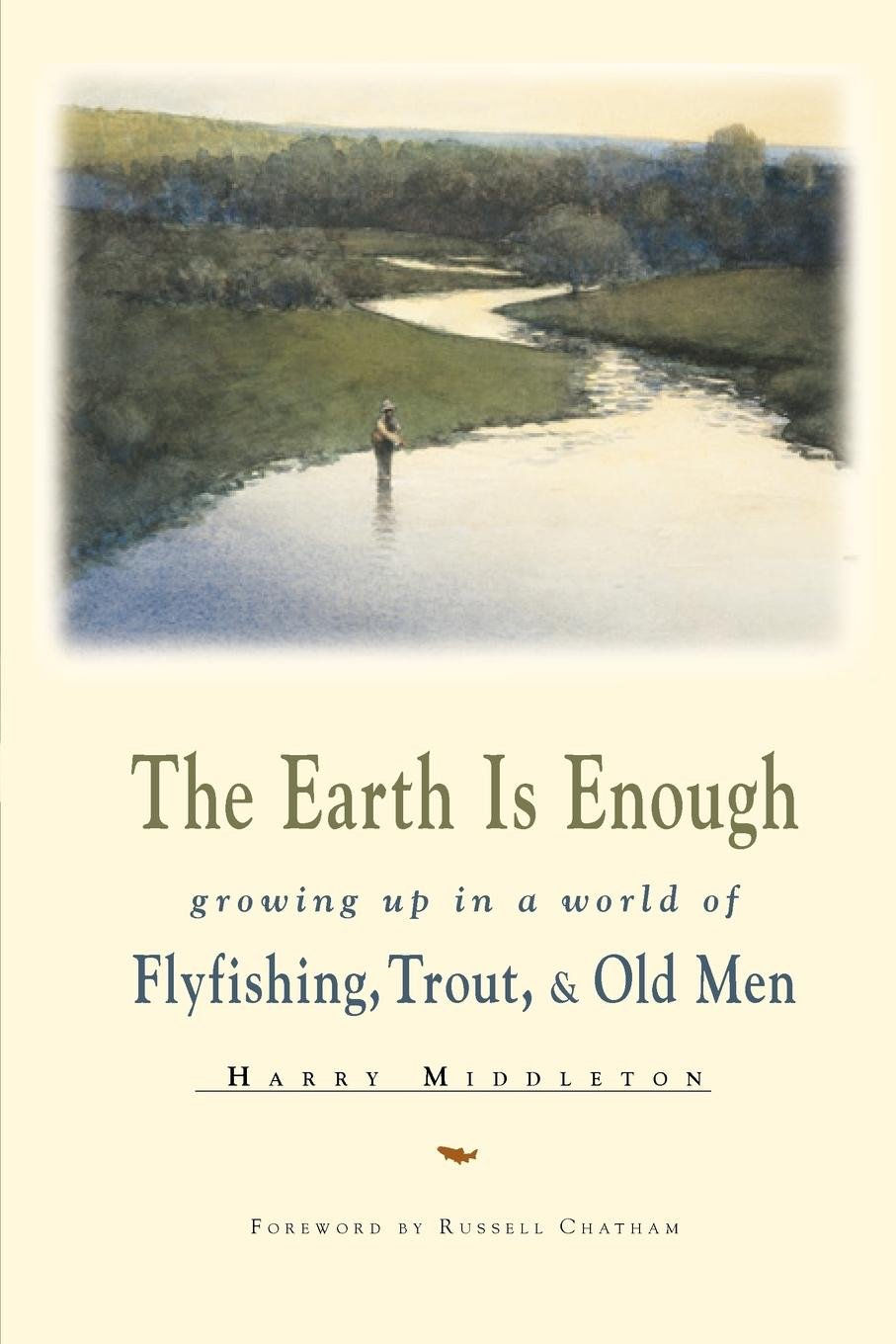
Harry Middleton died in 1993 at age 43, leaving behind five books and a reputation that has only grown since. The Earth Is Enough is his most celebrated fly fishing memoir. It won the Friends of American Writers Award, the Outdoor Writers Association of America Best Book Award, and the Southeastern Outdoor Press Best Book Award.
Annie Dillard called it "a grand true story and its wonderful old men are classic American characters." Ted Leeson — whose Benchside Reference appears in this article's recommended reading list — wrote that it is "a haunting book, beautiful and funny and sad, written with enormous warmth and grace."
The story follows Middleton's boyhood in 1965, when the Vietnam War separated him from his father and landed him on a hardscrabble farm in the Ozark Mountains of Arkansas. His grandfather and uncle took him in. Both men were subsistence farmers, devoted fly fishers, and quietly radical in their indifference to ambition, profit, and anything not essential to a life well lived. Their Sioux neighbor, Elias Wonder, completed the picture. Together they taught a 12-year-old boy that the earth, and the trout in its streams, were enough.
Reviewers consistently compare it to A River Runs Through It, also on this list. Both are coming-of-age fly fishing memoirs in which the sport carries more weight than fish. Both are written with prose that earns its descriptions. The comparison is fair, but Middleton's Ozarks are rougher country and his old men are funnier.
Les Jones offered no elaboration when recommending this title. He didn't need to.
— Recommended by Les Jones
The River Why by David James Duncan (1983)
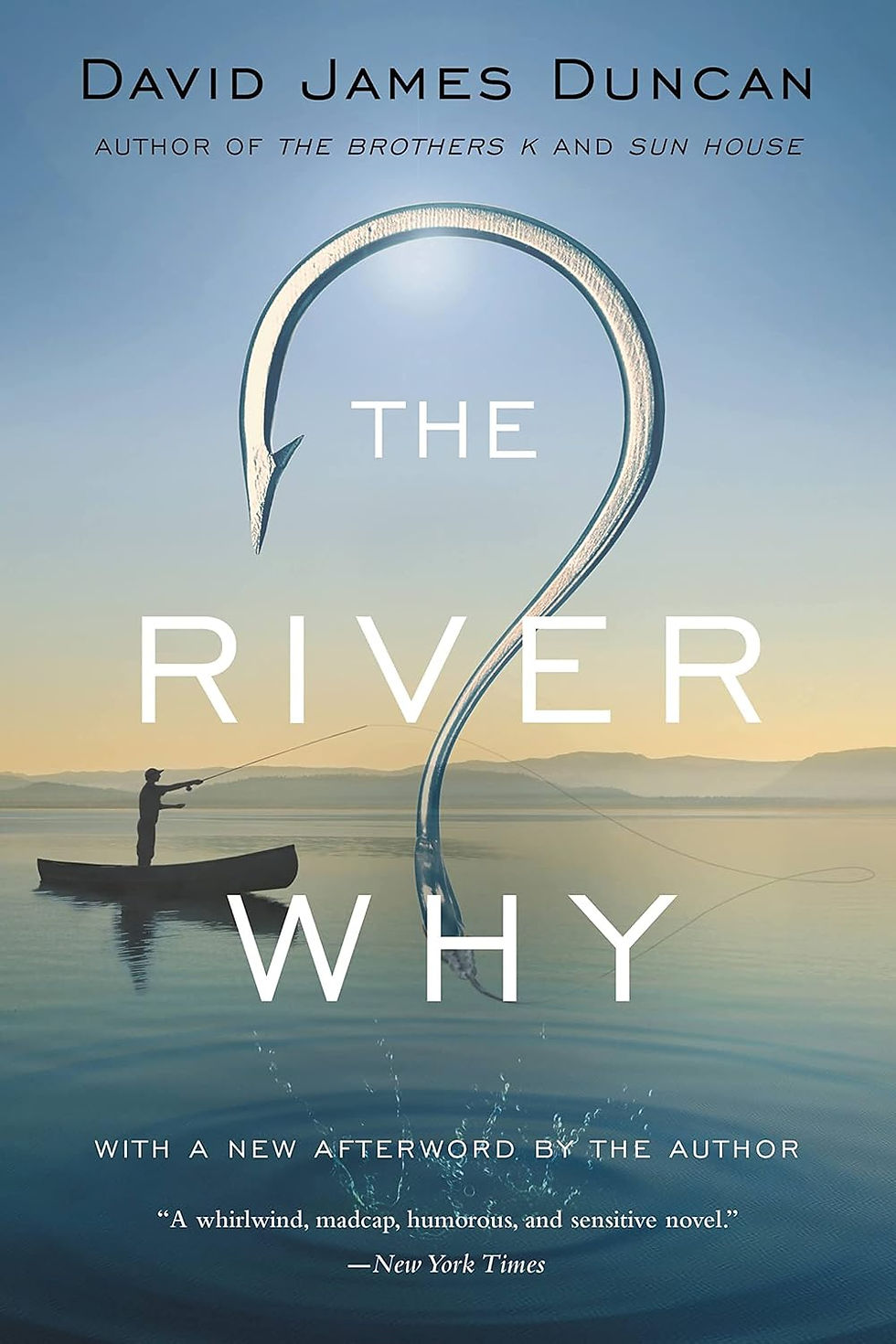
Before A River Runs Through It was a Robert Redford film, before fly fishing literature had found its modern voice, David James Duncan published this novel about a young man from Portland who retreats to a remote Oregon river to do nothing but fish. It did not go gently.
The New York Times called it "a whirlwind, madcap, humorous and sensitive novel." Publishers Weekly called it "a veritable epic of flyfishing." The San Francisco Chronicle ranked it among the 100 best novels of the American West. It has been continuously in print since 1983.
River Why follows Gus Orviston, growing up in a household at war with itself. His father, a tweed-wearing English fly purist, and his mother, an unrepentant bait angler, have turned their marriage into a running argument about the right way to fish. Gus, who has inherited his father's devotion to the fly rod without his pretension, escapes to a cabin on a Pacific Northwest coastal river. His plan: fish all day, every day. What actually happens is harder to describe and more worth reading.
The novel is set in the rivers and forests of the Oregon Coast Range, terrain that OFF members will recognize. Steelhead and sea-run cutthroat move through its pages. The conservation themes that run through the book — habitat loss, the relationship between humans and the rivers they depend on — read as urgently today as they did in 1983.
It is funny in a way that serious fly fishing literature rarely allows itself to be. It is also, by the end, something close to profound.
Eric Scollard recommended it in the same message as A River Runs Through It. That says everything about how he reads.
— Recommended by Eric Scollard
Conservation Reading
Salmon Wars: The Dark Underbelly of Our Favorite Fish by Douglas Frantz and Catherine Collins (2022)
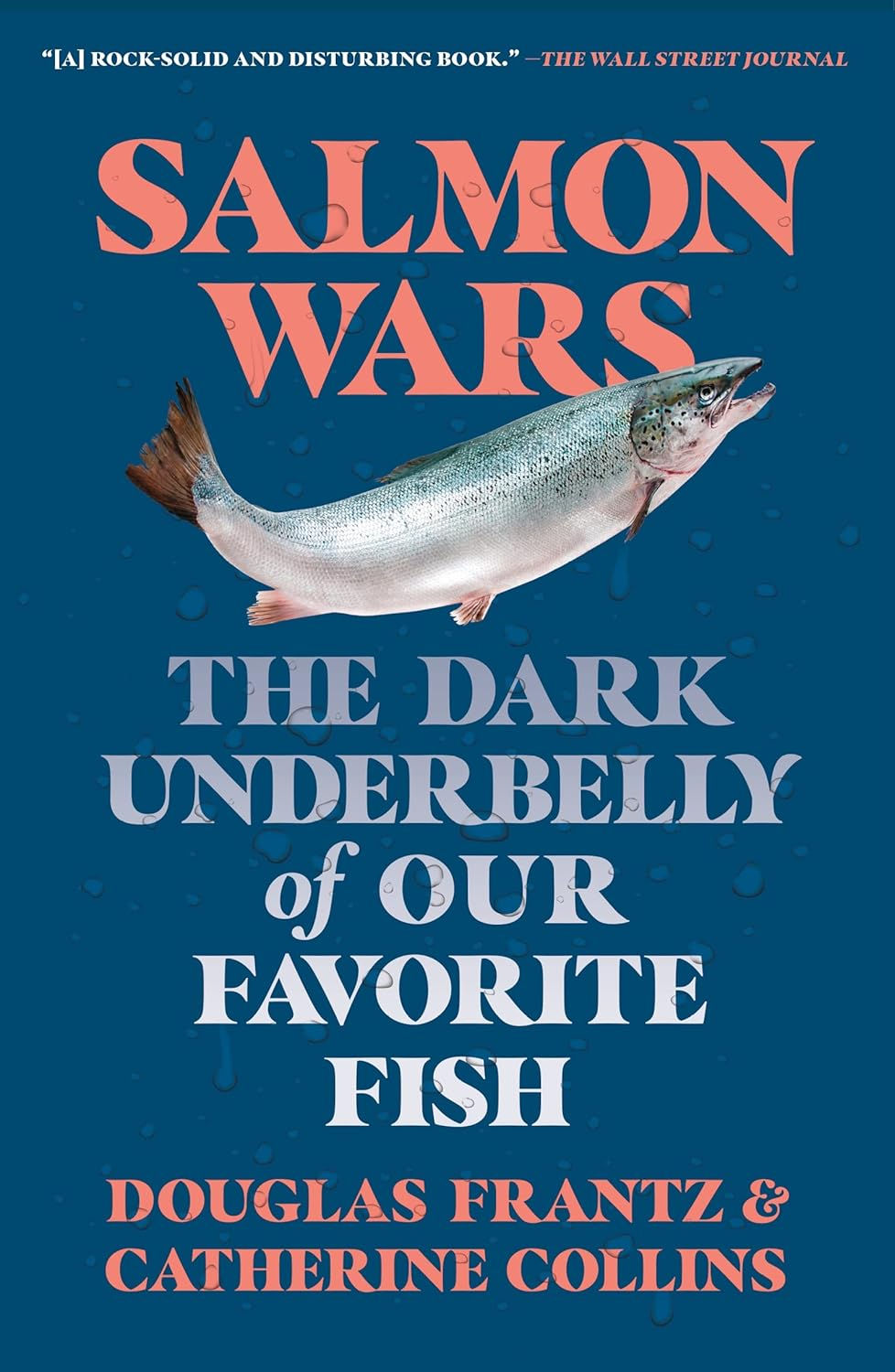
For members of OFF, the fight for wild Pacific Northwest salmon is personal. The club partners with Sound Salmon Solutions and Long Live the Kings, two organizations working to protect and restore native salmon runs in Puget Sound and the surrounding region. Salmon Wars puts that work in global context.
Douglas Frantz is a Pulitzer Prize-winning correspondent and former managing editor of the Los Angeles Times. Catherine Collins is a former investigative journalist and private investigator. Together they spent years documenting what industrial salmon farming has done to wild salmon populations, ocean ecosystems, and public health.
The book follows characters including the fly-fishing activist who risked his career to ban salmon farms in Puget Sound — a story with direct resonance for anyone fishing Washington waters.
Kirkus Reviews gave it a starred review. Yvon Chouinard, whose Pheasant Tail Simplicity also appears on this list, wrote that after reading it, he doubted anyone would choose to eat net pen farmed salmon again. Martin Baron, former editor of the Washington Post, called it "impressively researched and absorbingly written."
The authors compare the salmon farming industry's tactics to Big Tobacco: counter-science, public relations campaigns, and sustained pressure on researchers who raise alarms.
The final chapters offer something beyond outrage. They document more sustainable alternatives and the people building them. It’s a welcome breath of optimism. Because conservation without a path forward is just grief.
— Recommended by Randy White
Stillwater Fly Fishing
Stillwater Fly Fishing: Competition-Inspired Strategies for Everyday Anglers by Devin Olsen (2024)
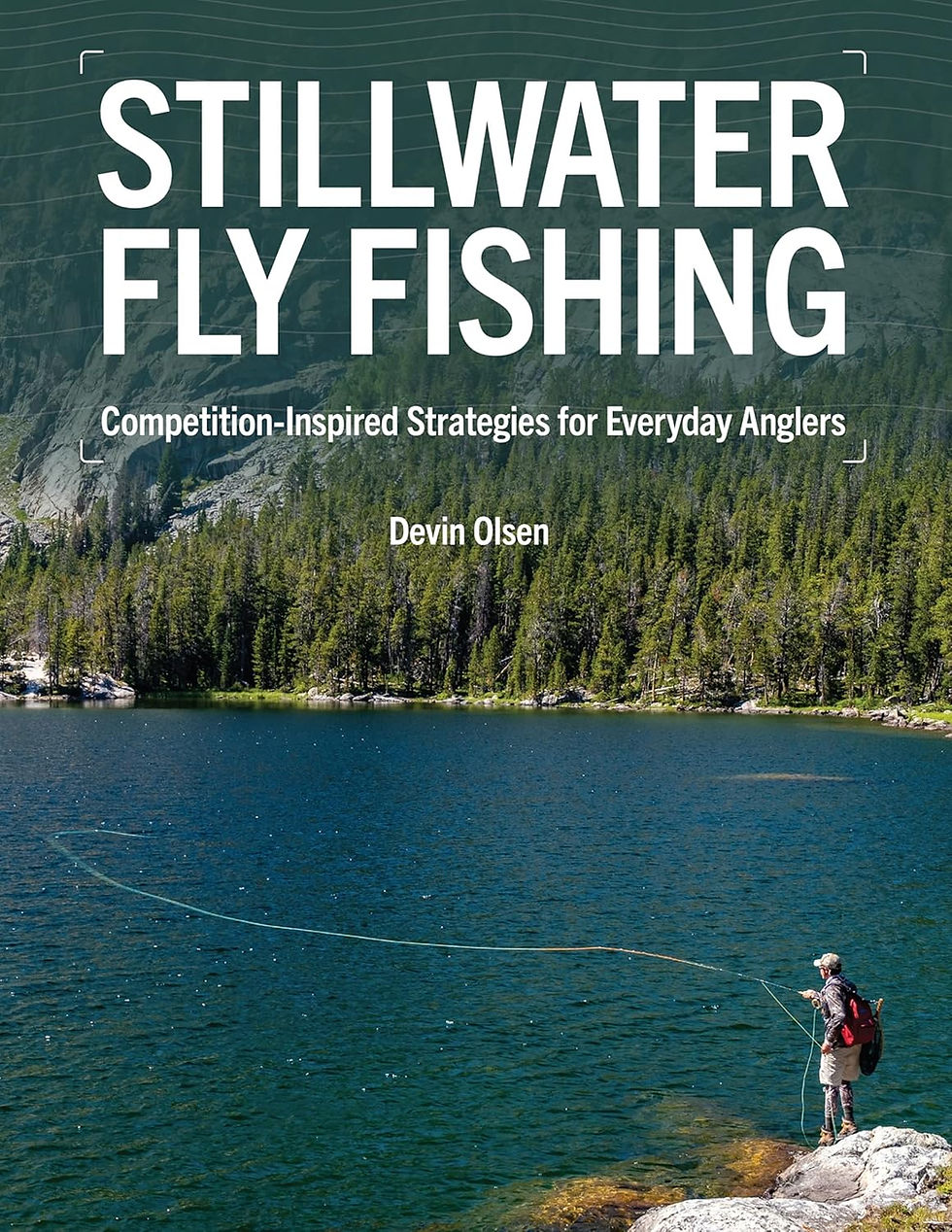
Many fly fishing books are written for river anglers. When lakes and reservoirs get mentioned, it’s often as an afterthought or a chapter buried at the back. But there’s a lot of challenge and enjoyment to be found on lakes. And Devin Olsen wrote the stillwater fly fishing book those anglers have been waiting for.
Olsen started fly fishing in Yellowstone at age 9. He began competing at 19 and earned a spot on Fly Fishing Team USA at 21. He has competed in 13 consecutive World Fly Fishing Championships, earning an individual bronze medal and multiple team medals. He also holds a bachelor's degree in ecology and a master's degree in fisheries science, and worked as a fisheries biologist before founding his shop, Tactical Fly Fisher.
That combination of elite competitor, trained scientist, and working angler shapes every page.
The first three chapters cover lake and reservoir ecology in enough detail to change how you read water. What follows is a complete stillwater fly fishing system: locating fish, fishing different depths with sinking lines, choosing retrieves and flies, loch-style techniques from a drifting boat, bank fishing, alpine lakes, and a series of case studies showing how Olsen applies the theory on the water.
One reviewer named it among the 10 best fly fishing books of the 21st century, writing that ‘no other resource comes close to the depth of knowledge found here and that much of this information simply wasn't available to the average American angler before this book’.
Randy White said, "One of the best books, so much detail."
OFF's lakes outings program covers stillwaters across the Pacific Northwest. This book belongs in the kit bag.
— Recommended by Randy White
More Member Recommendations
These titles came from the member forum. Every one of them comes with a personal endorsement.
Fly Fishing Small Streams by John Gierach (1989). A focused, unhurried look at small-stream fly fishing tactics and the particular pleasures of fishing water most anglers walk past. Randy White calls it a personal favorite. If John Gierach's Trout Bum, featured earlier in this article, hooks you, this is the natural next read.
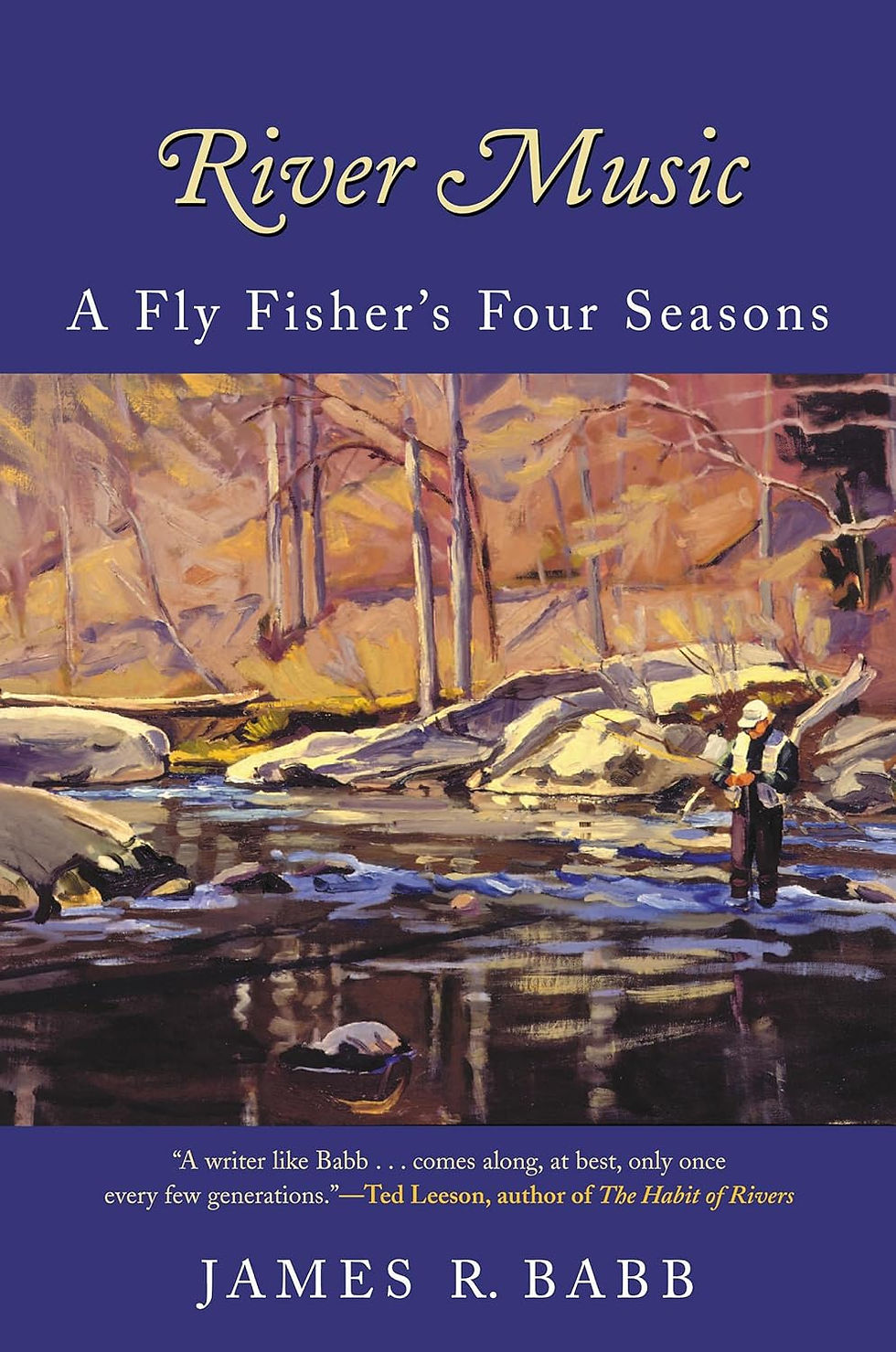
River Music: A Fly Fisher's Four Seasons by James R. Babb (2005). Babb is the editor of Gray's Sporting Journal and one of fly fishing literature's most distinctive voices. Library Journal called his previous book the best fly fishing book of 2001, and one reviewer called him "the fly fishing Mark Twain." This collection of 16 essays follows a fly fisher's year through the seasons, from Quebec salmon streams to Chilean rivers, mixing humor, elegy, and sharp nature writing. Randy White said he's "one of my favorite authors" and that any of Babb's books are worth reading.
Fly Fishing Through the Midlife Crisis by Howell Raines (1993). A New York Times bestseller from a Pulitzer Prize-winning journalist who was also the paper's executive editor. Raines uses fly fishing as an extended metaphor. It’s similar in spirit to the books by Maclean and Middleton featured in this article. The book traces his journey from a childhood of bait fishing in Alabama to the catch-and-release philosophy of his mentor Dick Blalock. Kirkus Reviews called it "a bold and eloquent work" and "a profound work that will hook readers from the start." Washington Post Book World said it was "a sweet narrative of friendship, fathers and sons, aging and of course, fishing." Randy White recommended it.
Survival Guide for Beginning Fly Anglers by Skip Morris. Here’s you’ll find a complete beginner's fly fishing instruction package. This is also one of the few books on this list that comes with two DVDs included, giving new anglers more than three hours of video instruction alongside the text. Skip Morris, who also co-authored the Morris and Chan stillwater book recommended below, has taught fly fishing to hundreds of thousands of anglers through his books, videos, and television work. The book limits itself to four very common types of fly fishing — the ones a new angler is actually likely to encounter near home — and strips each down to what matters. Brian Huntoon recommended it alongside The Orvis Guide to Beginning Fly Fishing, noting it was "chock full of excellent details and strategies and tips."
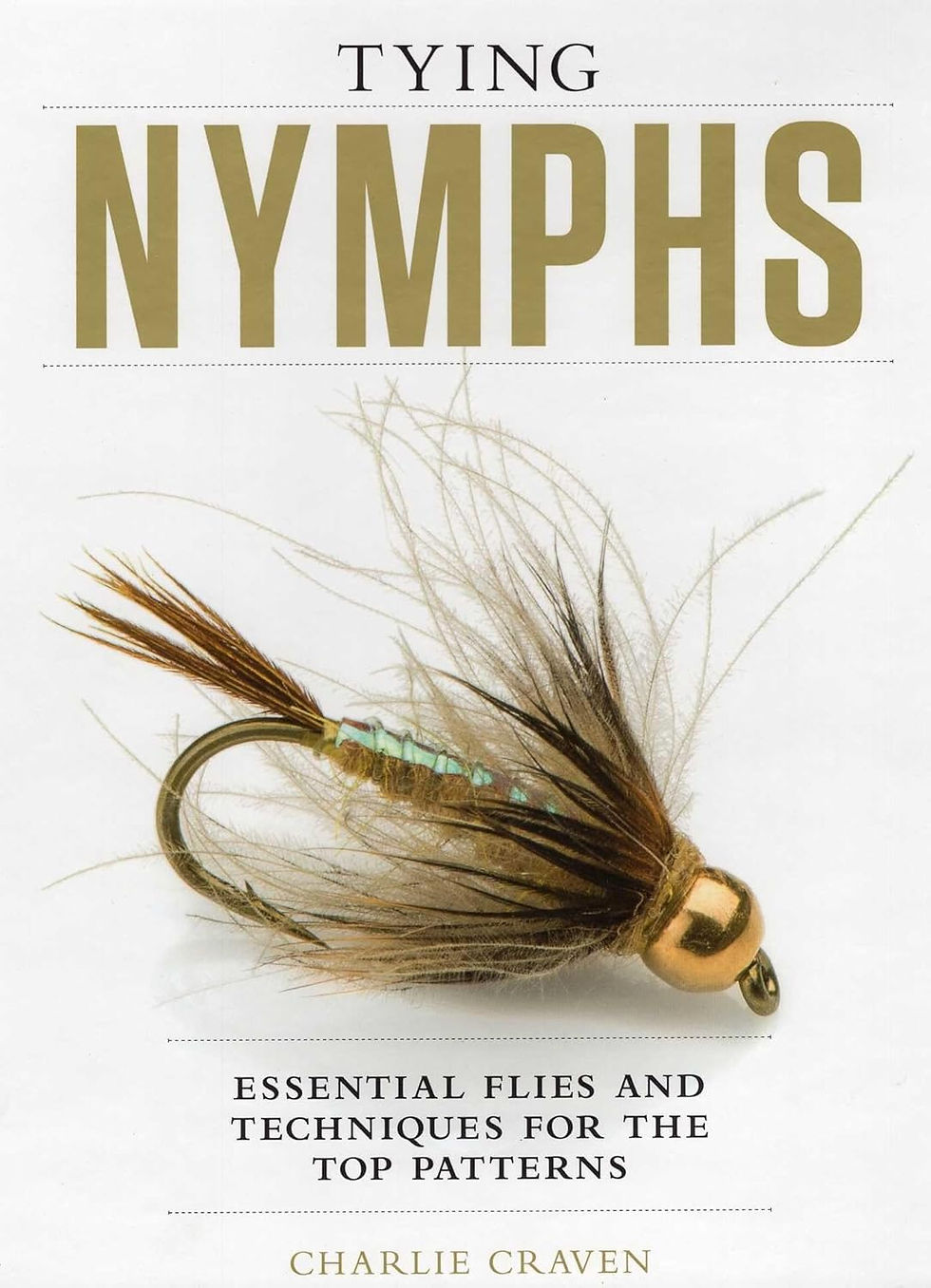
Tying Nymphs by Charlie Craven (2016). A highly regarded fly tying guide focused specifically on nymph patterns, from basic to advanced, with step-by-step instruction and detailed photography. Craven, based in Colorado, is one of the most respected tiers working today and the founder of Charlie's FlyBox. Randy White recommended it.
Stillwater Strategies by Tim Lockhart (2013). A practical stillwater fly fishing guide covering tactics, techniques, and fly selection for lake and reservoir trout. For members interested in OFF's lakes outings program, this pairs naturally with Devin Olsen's Stillwater Fly Fishing, featured earlier in this article. Randy White recommended it.
Morris and Chan: Fly Fishing Trout Lakes by Skip Morris and Brian Chan (1999). A stillwater fly fishing classic co-authored by Skip Morris, who also wrote the beginner's guide recommended above, and Brian Chan, one of North America's foremost stillwater specialists. The book covers tactics, flies, and equipment for trout lakes with the depth of two lifetimes of lake fishing experience. Randy White recommended it.
Upstream by Langdon Cook (2017). A Pacific Northwest-focused look at the world of wild salmon and steelhead — their biology, their cultural significance, and the people who fight for their survival. Cook, a Seattle-based writer, has spent years reporting on the rivers and fish of the region. If you found Salmon Wars compelling, also featured in this article, this is a natural companion. Randy White recommended it.
Reading the Water: A Fly Fisher's Handbook for Finding Trout in All Types of Water by Dave Hughes (1988). A practical guide to reading rivers and locating trout — understanding currents, structure, and how trout use different types of water across seasons. Hughes is one of the Pacific Northwest's most prolific fly fishing authors, with more than two dozen books on trout fishing and entomology. Cris Sherman recommended it as the book that helped him when he started fly fishing, noting he found it helpful but wasn't sure it was still in print. It is.
On the Spine of Time / The Starlight Creek Angling Society by Harry Middleton. Les Jones, who recommended The Earth Is Enough in this article's featured reviews, also flagged these two companion titles from Middleton's short catalog. On the Spine of Time (1991) follows Middleton into the hill country of the American South, fishing remote streams and meeting the people who live alongside them. The Starlight Creek Angling Society (1992) is a novel built around the fictional fishing club of the title. Both share the voice and sensibility of The Earth Is Enough. Signed copies of the Starlight Creek title have been known to fetch over $1,500 — which tells you something about the hold Middleton has on readers who find him.
W. Blacker's Art of Angling by W. Blacker (1842). The full title is worth knowing: Art of Angling, and Complete System of Fly Making and Dying of Colours. Blacker's 1842 fly tying and technique guide reads like a craftsman's handbook — the directness of someone who fished for a living, not an academic writing about it. Jeremy Edwards recommended it as part of a deep dive into fly fishing history. Best of all, it's free. Full text available for download at the Internet Archive: https://archive.org/details/wblackersartofan00blac
The History of Fly-Fishing in Fifty Flies by Ian Whitelaw (2015). A New York Times bestselling fly fishing history book that traces the sport's 2,000-year evolution through fifty milestone fly patterns, from the first feathered hooks to contemporary synthetics. Each fly comes with tying notes, historical context, photographs, and a profile of the angler or tier who created it. The Star Tribune called it "a delightful ramble along the stream of fishing history." For anyone drawn to the historical titles in the featured section — Ronalds, and now Blacker above — this is the modern bridge between those foundations and today's fly box. Eric Scollard recommended it.
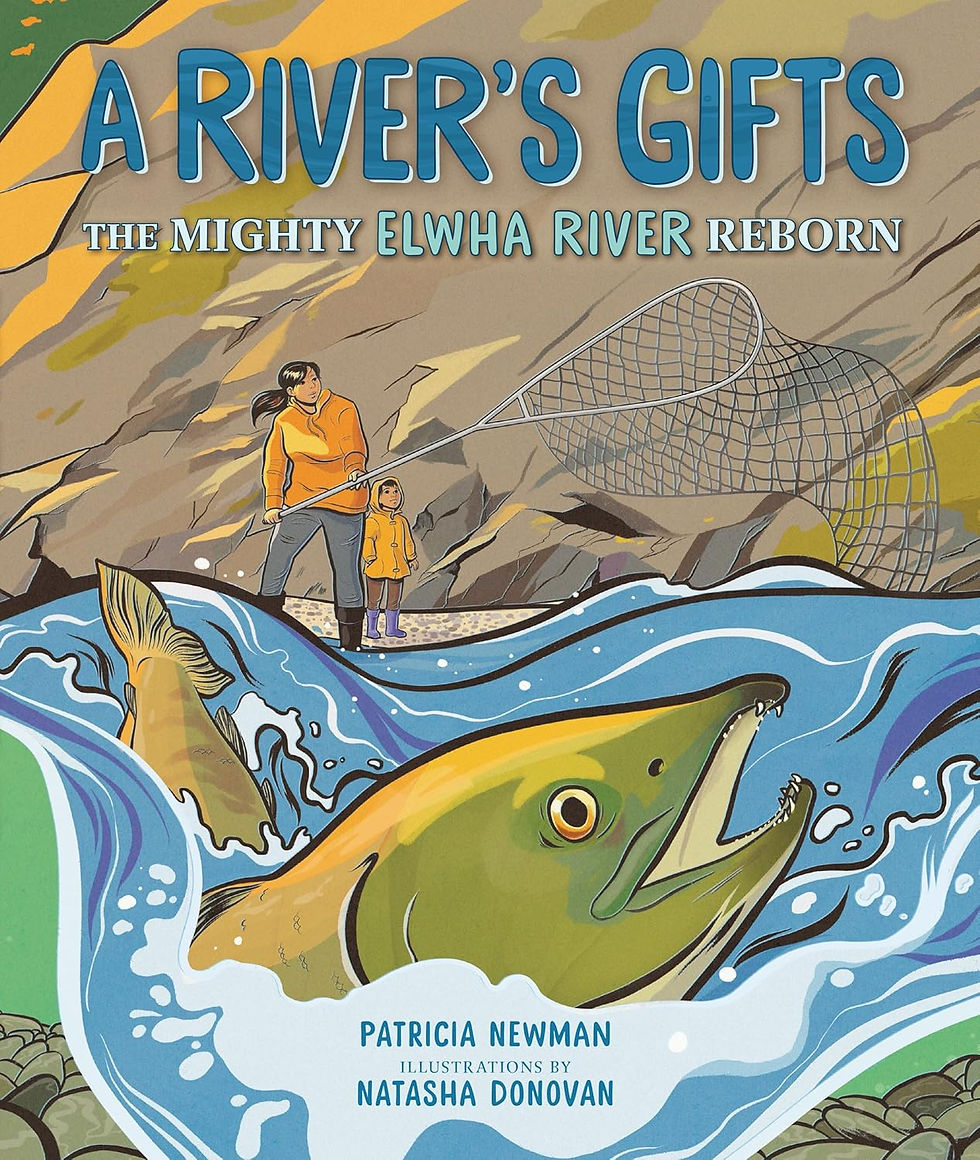
A River's Gifts: The Mighty Elwha River Reborn by Patricia Newman, illustrated by Natasha Donovan (2022). This one is different. It's a children's picture book. And it belongs on this list. The Elwha River runs through Olympic National Park, on the Olympic Peninsula just west of the Puget Sound watershed where many OFF members fish. For decades, two dams blocked its salmon runs and flooded the ancestral lands of the Lower Elwha Klallam Tribe. In 2011, the dams came down in the largest dam removal project in American history. The salmon came back. Newman, a Robert F. Sibert Honor recipient, tells that story for young readers with the care and rigor of serious nonfiction. Kirkus Reviews gave it a starred review, and Booklist called it "powerful in its hopeful story." Randy White recommended it. So did a fly fishing member on Goodreads, who wrote that he watched the entire saga of the Elwha dams unfold and was "astounded at how quickly the salmon returned." A book worth handing to a young angler — or reading yourself.
The Orvis Ultimate Book of Fly Fishing by Tom Rosenbauer and others. One of the most comprehensive fly fishing reference books available, covering casting, reading water, fly selection, and tactics for trout across a range of conditions and water types. Steve Ruppert recommended it alongside The Little Black Book of Fly Fishing, also featured in this article. Together they cover beginner to advanced fly fishing instruction, both written by Trout Unlimited editors.
The Orvis Guide to Beginning Fly Fishing by Tom Rosenbauer. The clearest beginner fly fishing instruction book Rosenbauer has written, covering the fundamentals without overwhelming new anglers. Brian Huntoon, who also recommended The Curtis Creek Manifesto in this article, said it contains "lots of solid ideas you may not have thought of even if you're a veteran fly fisher."
The Benchside Reference: Introduction to Fly Tying by Ted Leeson (2006). The most thorough fly tying reference book on the market, covering materials, tools, techniques, and patterns with the precision of a professional tyer. Ted Leeson also wrote the blurb for The Earth Is Enough featured earlier in this article, and Randy White calls this one "the bible of fly tying."
Trout by Ray Bergman (1938). A cornerstone of American fly fishing literature, covering trout fishing techniques, tackle, and classic fly patterns with the authority of someone who spent decades on the water as angling editor of Outdoor Life. Jeremy Edwards, whose recommendations anchor the featured reviews in this article, said it is "a great mix of practical fundamentals and engaging storytelling" and that the color plates of classic fly patterns alone earn its place on the shelf.
Before You Buy, Check Your Local Library
Many of these titles are available in current collections or can be requested through interlibrary loan. Start your search through King County Library System, Central Skagit Library, or Sno-Isle Libraries.
Come Fish with Us
These conversations happen on the club's private member forum, one of the many benefits of OFF membership. Meetings are free and open to the public. You're always welcome to show up, join in, and see what we're about.
Member recommendations are presented as submitted. Book descriptions and review excerpts were researched and written by Ryan May. Any errors in description or attribution are his alone.


Comments